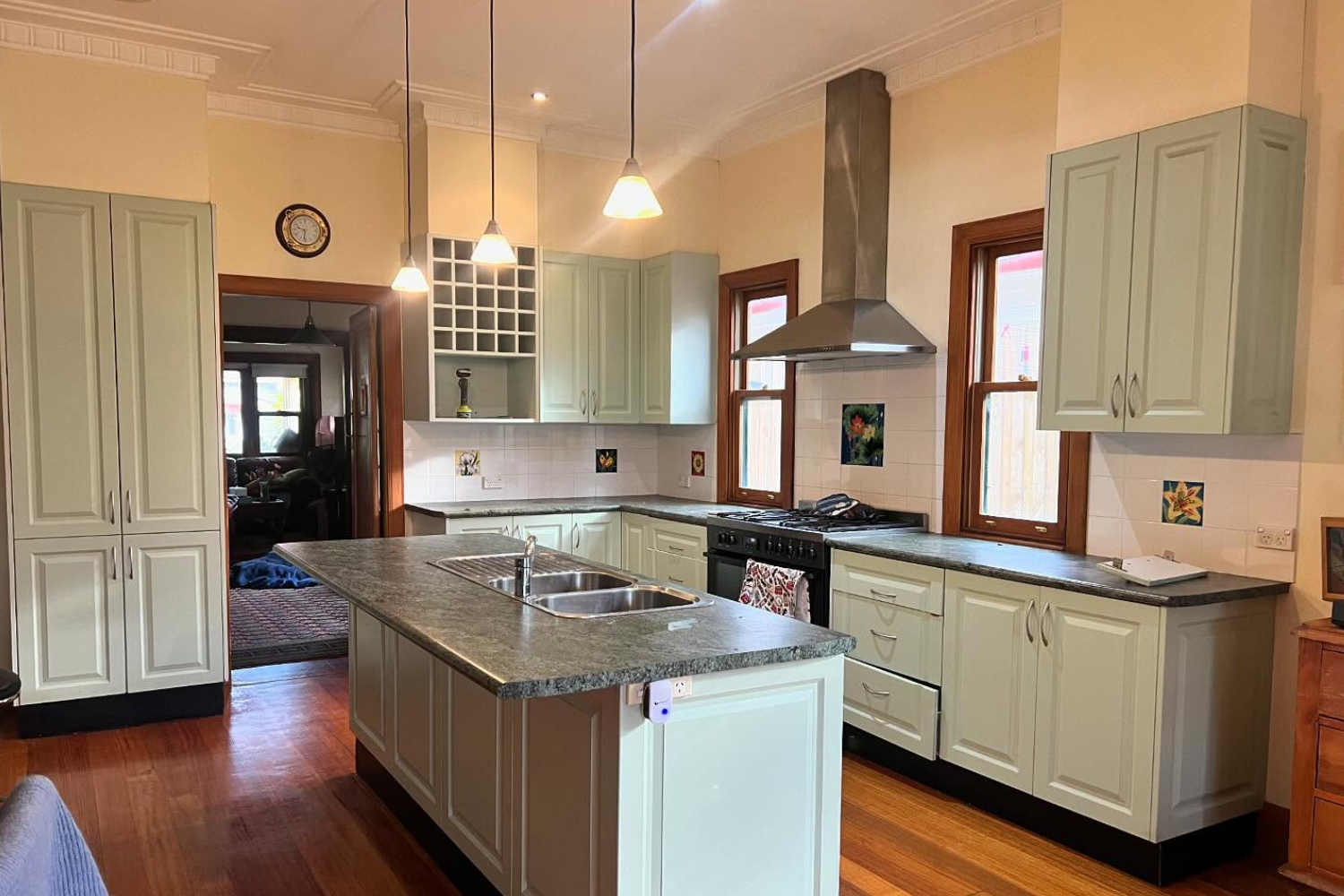
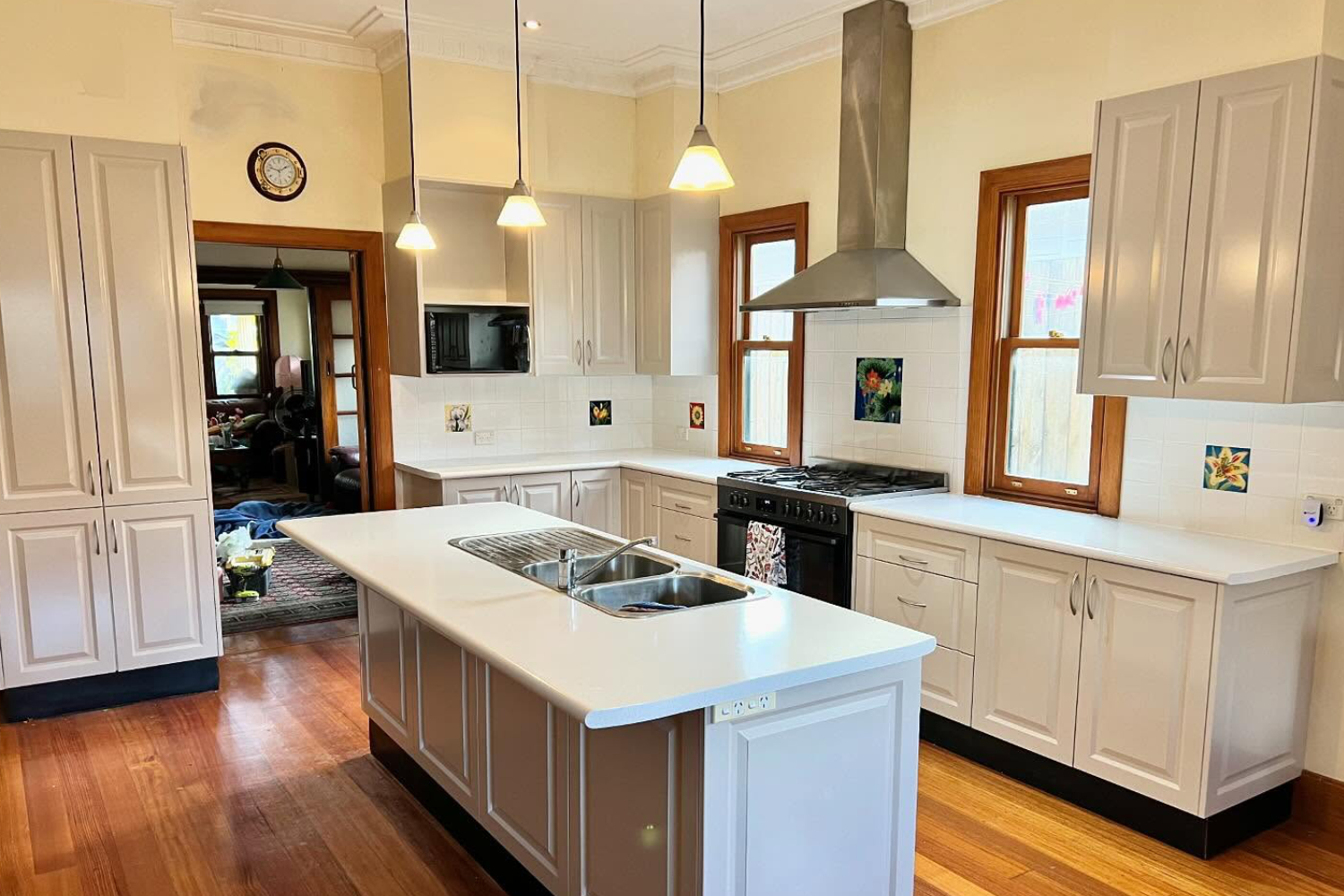
Full ResurfacingvsFull Renovation
Renovate or Resurface?
When your kitchen starts to look outdated or worn, the big question is: should you resurface or fully renovate?
Both options can transform your space – but they differ significantly in cost, time, and overall impact.
Understanding the pros and cons of each will help you make the right decision for your home, budget, and lifestyle.
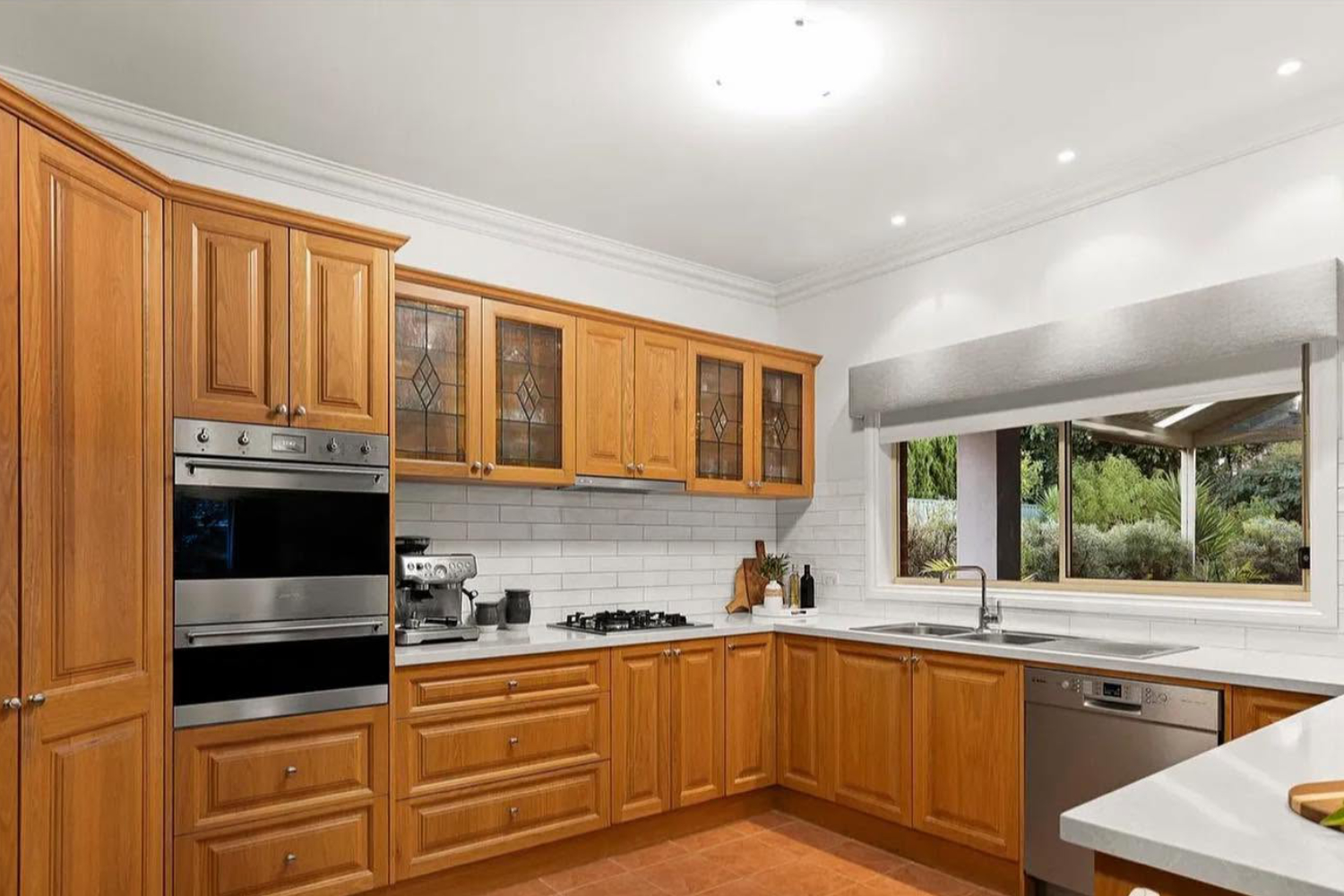
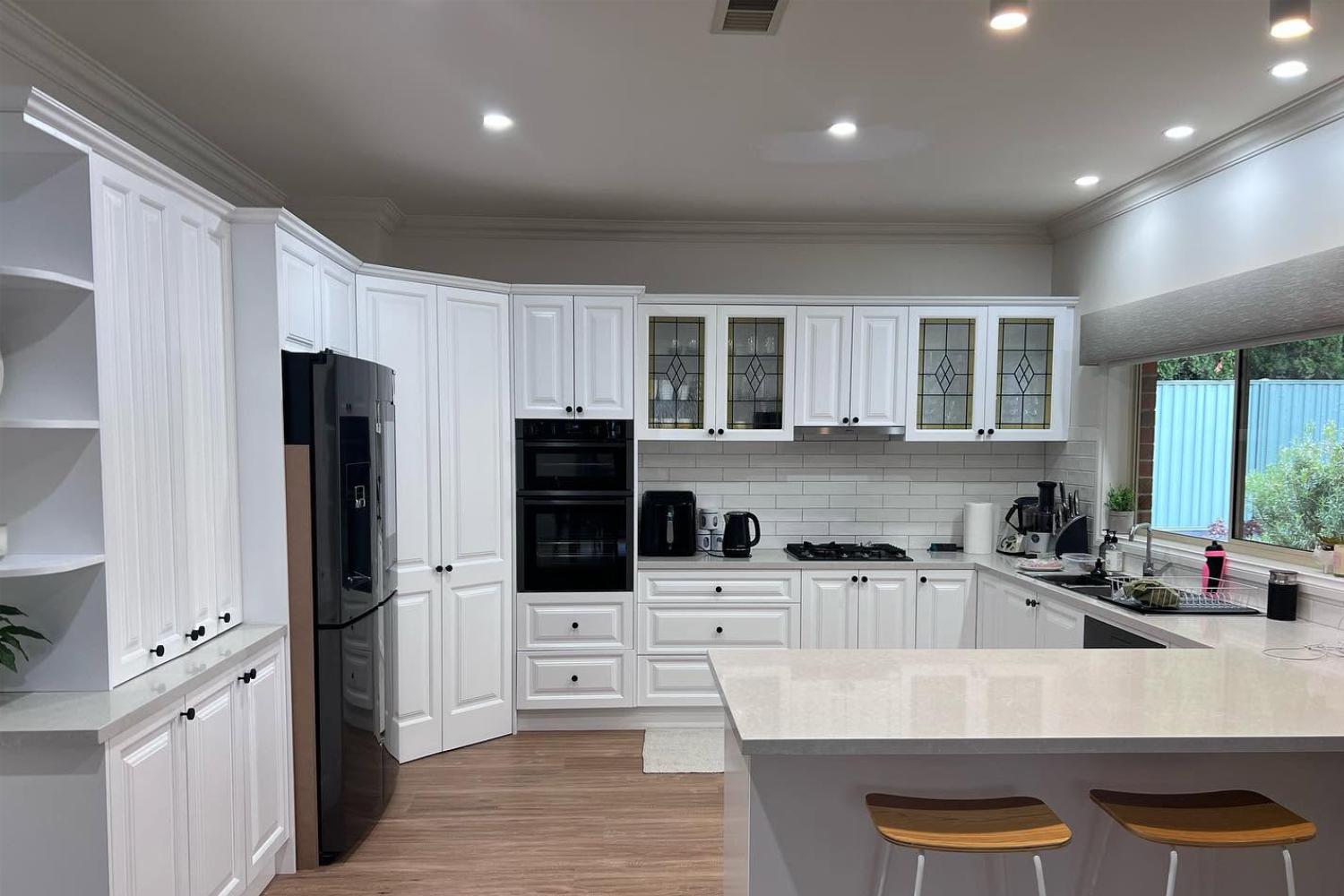

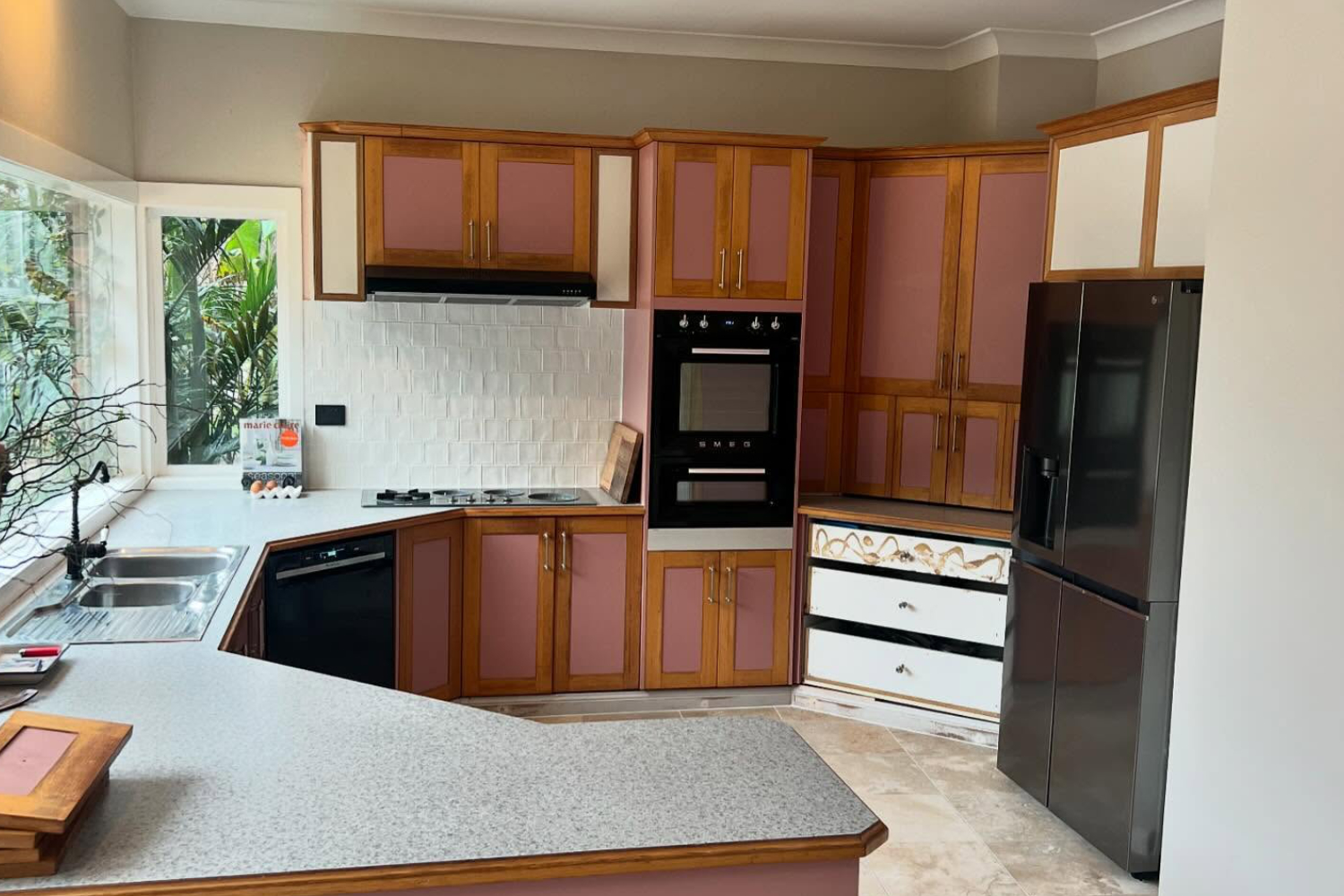
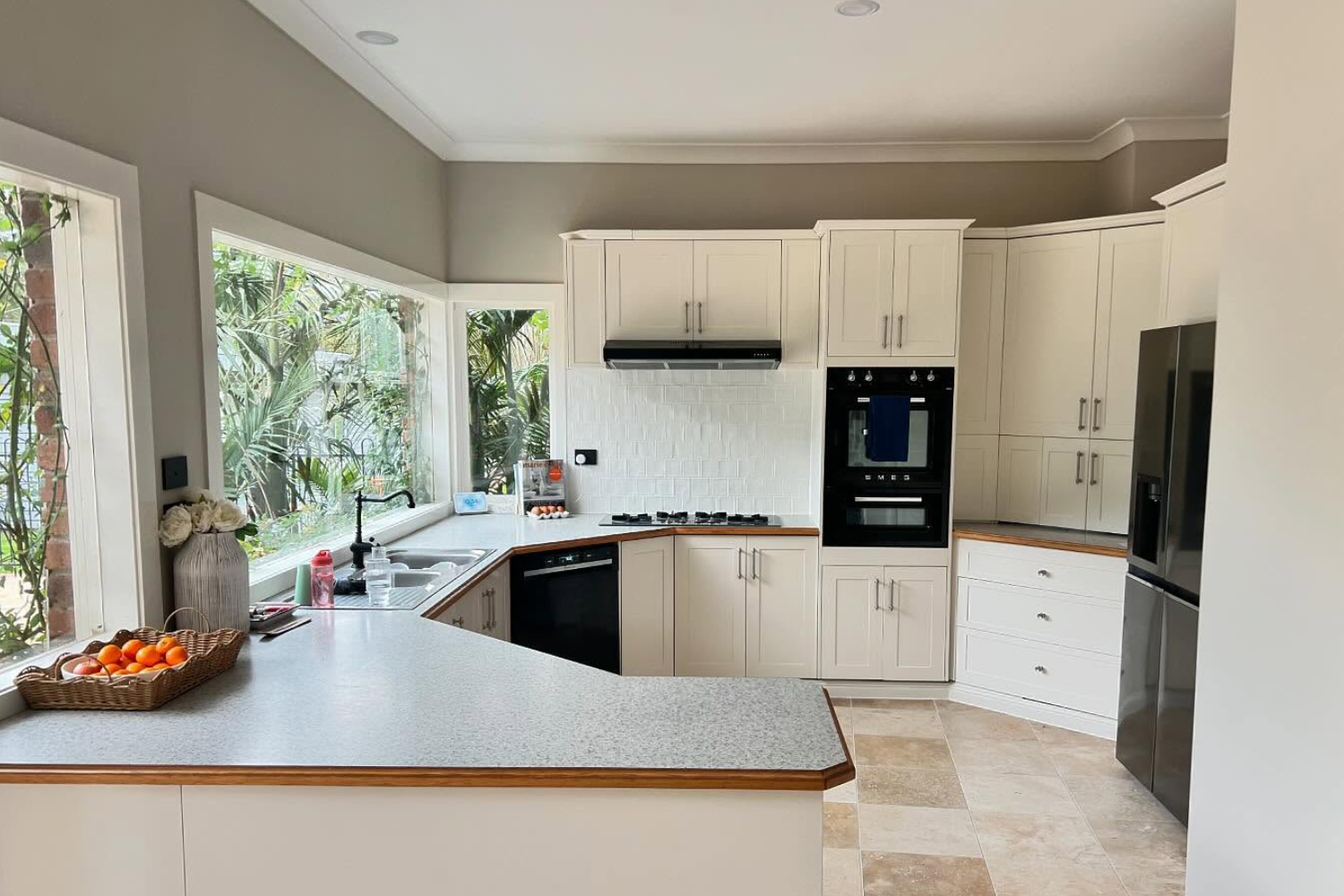
What is Kitchen Resurfacing?
Kitchen resurfacing (also known as refinishing) involves updating the existing surfaces of your kitchen without removing or replacing the entire structure.
This can include:
- Cabinet door refinishing or repainting
- Benchtop resurfacing
- Tile refinishing
- Splashback updates
- Colour and finish changes
Instead of starting from scratch, resurfacing works with what you already have, giving your kitchen a fresh, modern look at a fraction of the cost.
What is a Full Kitchen Renovation?
A full renovation involves completely removing and replacing your kitchen, including cabinetry, benchtops, appliances, layout, and sometimes plumbing and electrical systems.
This option is more extensive and allows for:
- Complete layout redesign
- New cabinetry and storage solutions
- Upgraded appliances
- Structural changes
It’s essentially building a brand-new kitchen from the ground up.
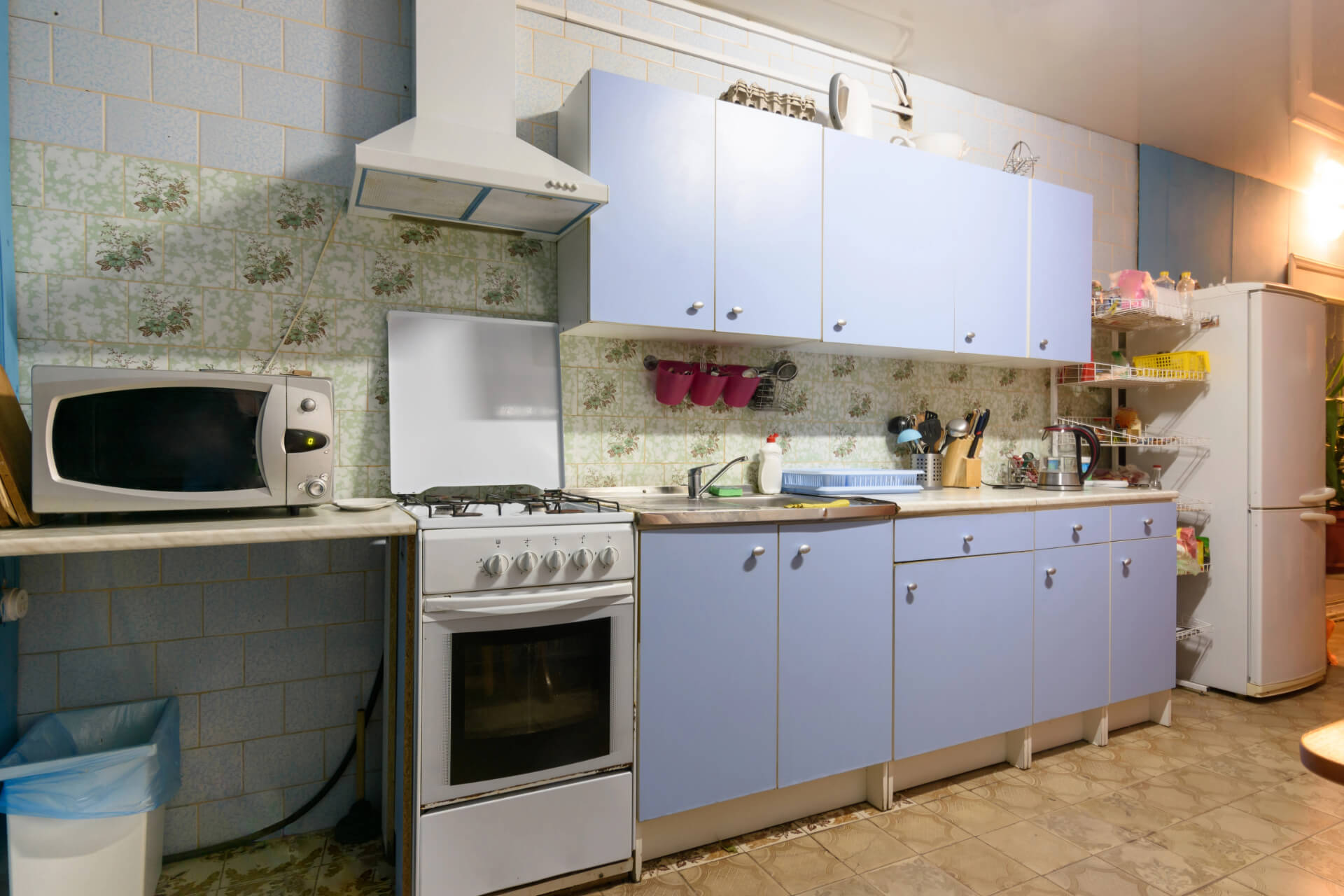
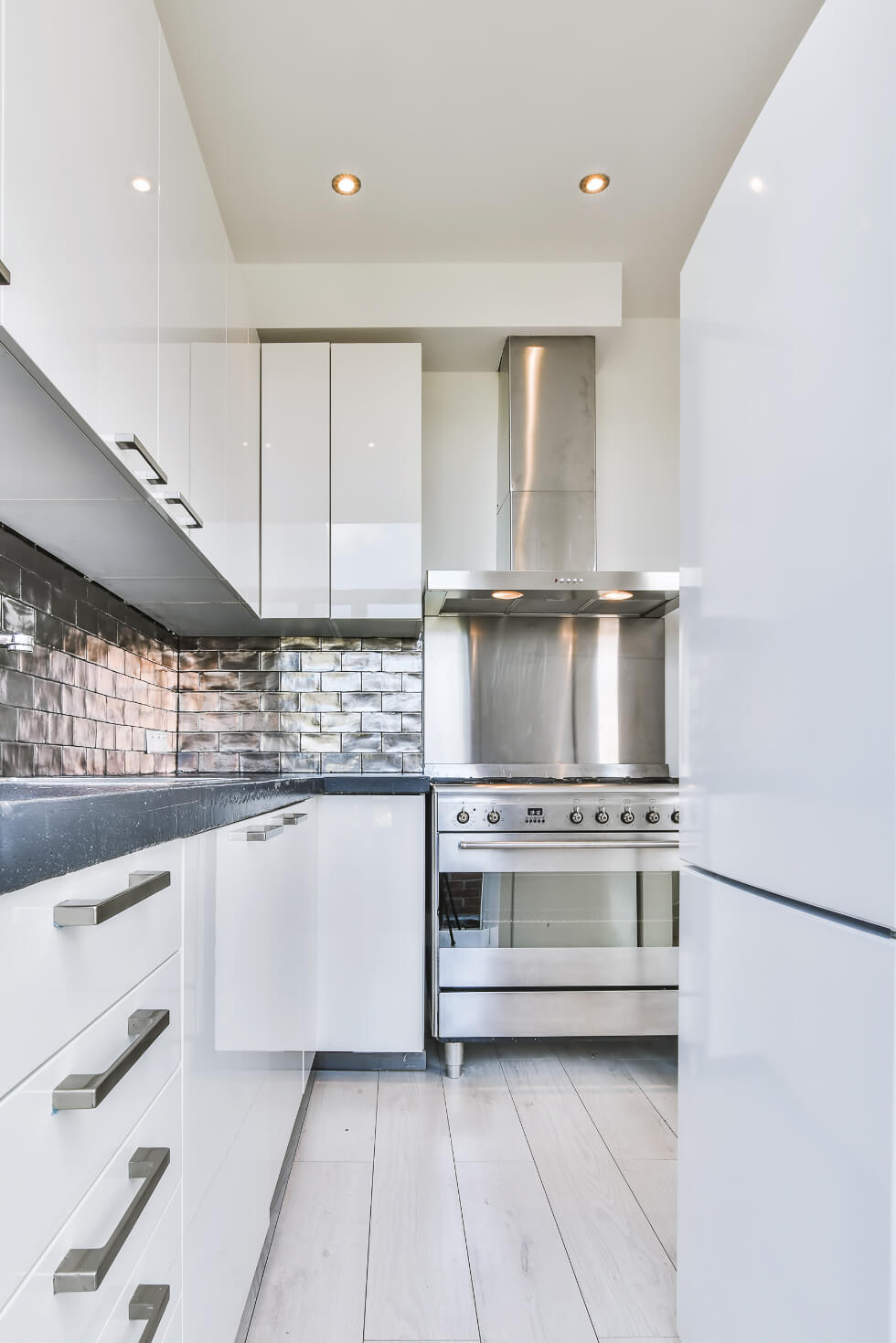
Key Differences at a Glance
COST
RESURFACING: Signficantly more affordable
RENOVATION: Higher costs for materials/labour
TIME FRAME
RESURFACING: Typically completed in a few days
RENOVATION: Can take up to several weeks to complete
DISRUPTION
RESURFACING: Minimal mess and downtime
RENOVATION: Major disruption to your home
Final Thoughts
Choosing between kitchen resurfacing and a full renovation ultimately comes down to your budget, timeline, and goals.
If you’re looking for a fast, affordable transformation with minimal disruption, resurfacing is a fantastic option.
If you’re ready for a complete redesign and long-term investment, a full renovation may be worth considering.